Man–fre 08–16 · Standardtilbud < 2 timer · Express 1–2 hverdage
Man–fre 08–16
Standardtilbud < 2 timer
Express-levering 1–2 hverdage
100 % dansk produktion
0
Spring til indhold
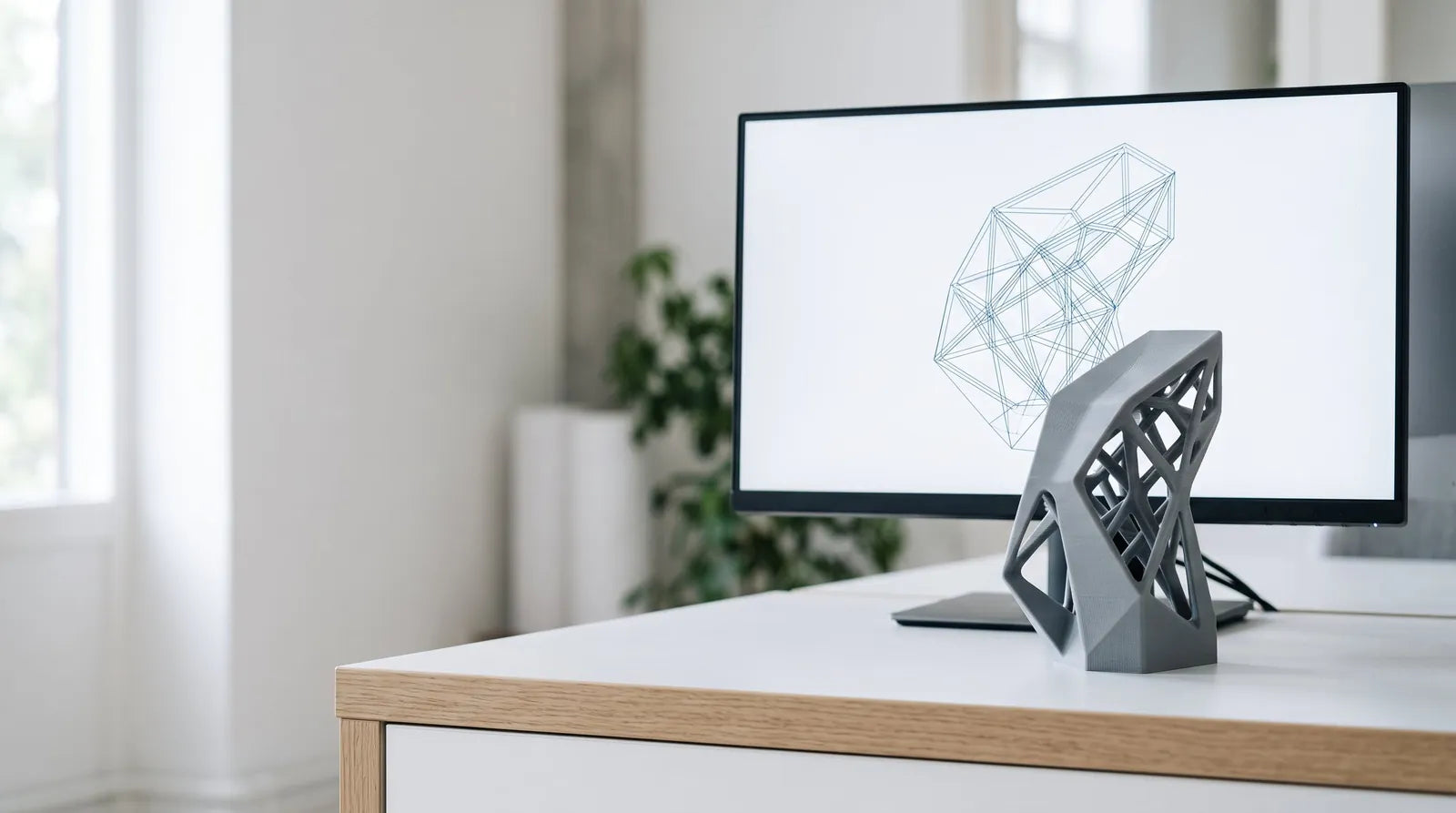
CAD model on screen with the printed part in front

CAD design — the model drawn to be produced

Parametric 3D models with tolerances and fits built in from the first line — drawn by people who produce parts themselves. STEP file, fixed price, your ownership.
Alle uploads behandles sikkert og fortroligt · NDA muligt
CAD · PARAMETRICTILBUD < 2 TIMER 100 % DANSK
WHAT IS GOOD CAD?

The difference between a good-looking model and a production-ready one

Anyone can draw something that looks right — the hard part is the model that can be produced: wall thicknesses the machine can build, fits with the correct clearance, radii that remove stress, and tolerances placed exactly where the function needs them. That is the difference between CAD as illustration and CAD as a basis for production.

We design parametrically: dimensions and relations sit as driving parameters, so revisions take minutes instead of redraws. And because the model is validated against the machines ten metres from the CAD station, the impossible is caught before it becomes expensive — not after the first failed print.

The delivery is always STEP plus the formats your next process needs, at a fixed price agreed in advance and with full ownership for you. We are happy to sign an NDA before you tell us anything at all.

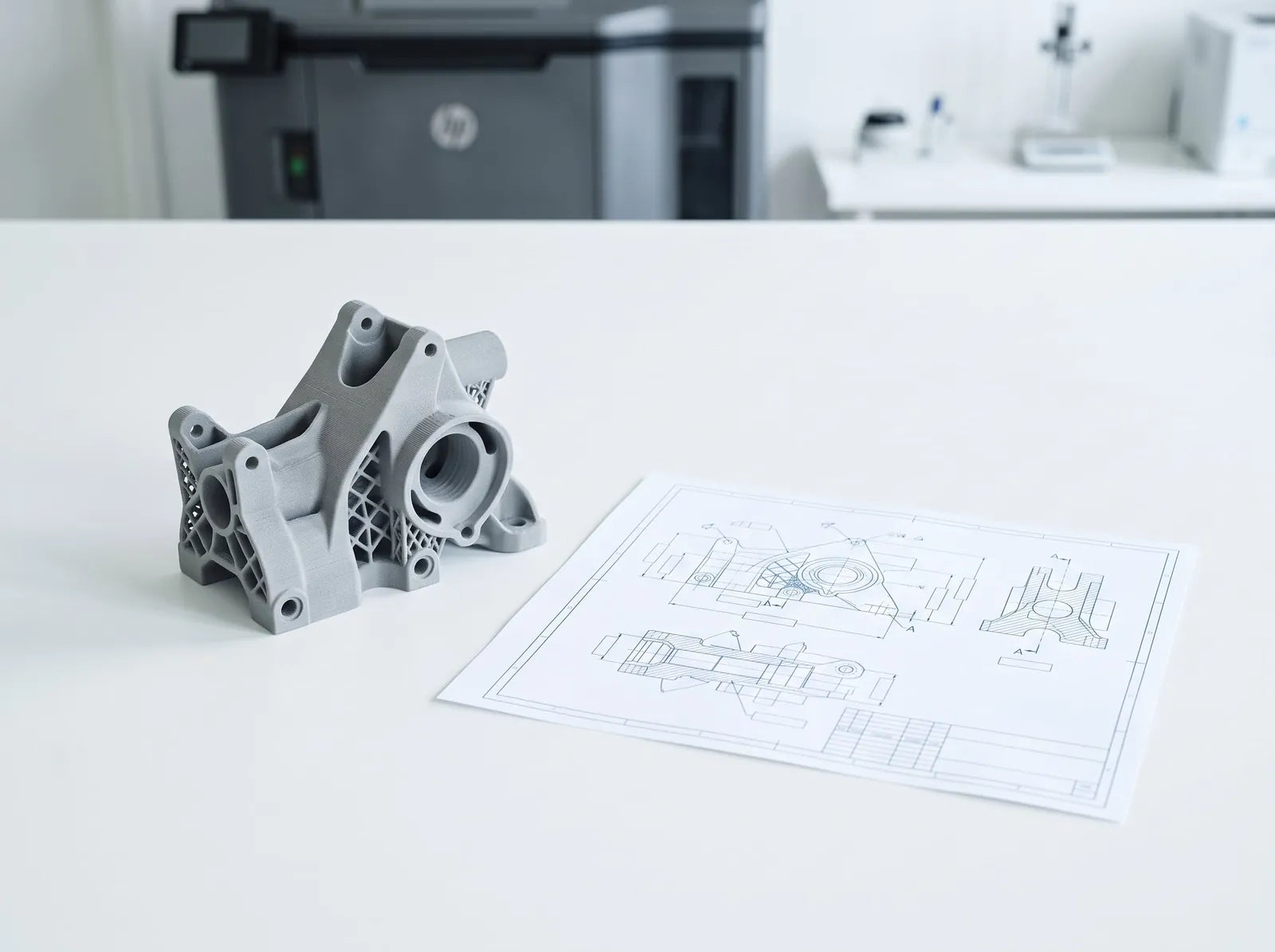
2D drawing with tolerances next to the part
CAD · VARDEDrawn by people who produce
WHAT WE DESIGN

Typical CAD jobs

From a single spare part to complete products.

Functional parts

Brackets, holders and mechanisms with fits that work first time.

Enclosures

Electronics housings with snap-fits, threaded inserts and cable routing.

Spare parts

Discontinued parts recreated from measurements — and improved at the same time.

Jigs & fixtures

Production tooling designed for your line and parts.

Product design

From idea to manufacturable geometry — including DfAM.

File repair

Poor STL/mesh files remodelled into true CAD.
KVALITET & FORTROLIGHED
Målerapport på kritiske mål NDA & fortrolige filer som standard Batch-sporbarhed pr. serie 100 % dansk produktion
GÅ I DYBDEN

Dive into the CAD work

Klik »Læs mere« og se hele afsnittet.

Parametrics in practiceMETHOD

Parametrics in practice

One change, whole model updated — that is why iterations are cheap.

Læs mere

Equation rather than sculpture

Driving dimensions and relations turn revisions into minutes and make variants almost free. Dead STL files are remodelled once — and all future development becomes cheap.

Critical dimensions are marked in the model, so production measures the right things.

See the design projects →
Snap-fits, threads and fitsDETAILS

Snap-fits, threads and fits

Experience from a thousand prints is in the model from the start.

Læs mere

Tested, not guessed

Snap-fit elasticity, boss geometry for threaded inserts and gap rules per material — the details are printed and measured in-house before they are designed into your part.

The first prototype clicks and screws together as intended — that saves iterations.

See prototype projects →
Fixed price and your ownershipECONOMY

Fixed price and your ownership

Design as a budgetable purchasing line.

Læs mere

No meter running, no lock-in

A fixed price agreed before the first line, STEP delivery and full ownership — the files are yours, even if the next part is produced elsewhere.

NDA before the conversation, confidentiality all the way. That is how trust is built.

Request a CAD job →
GALLERI

CAD work from the workshop

From sketch to parametrics
MODELLINGFrom sketch to parametrics
Requirements agreed first
CLARIFICATIONRequirements agreed first
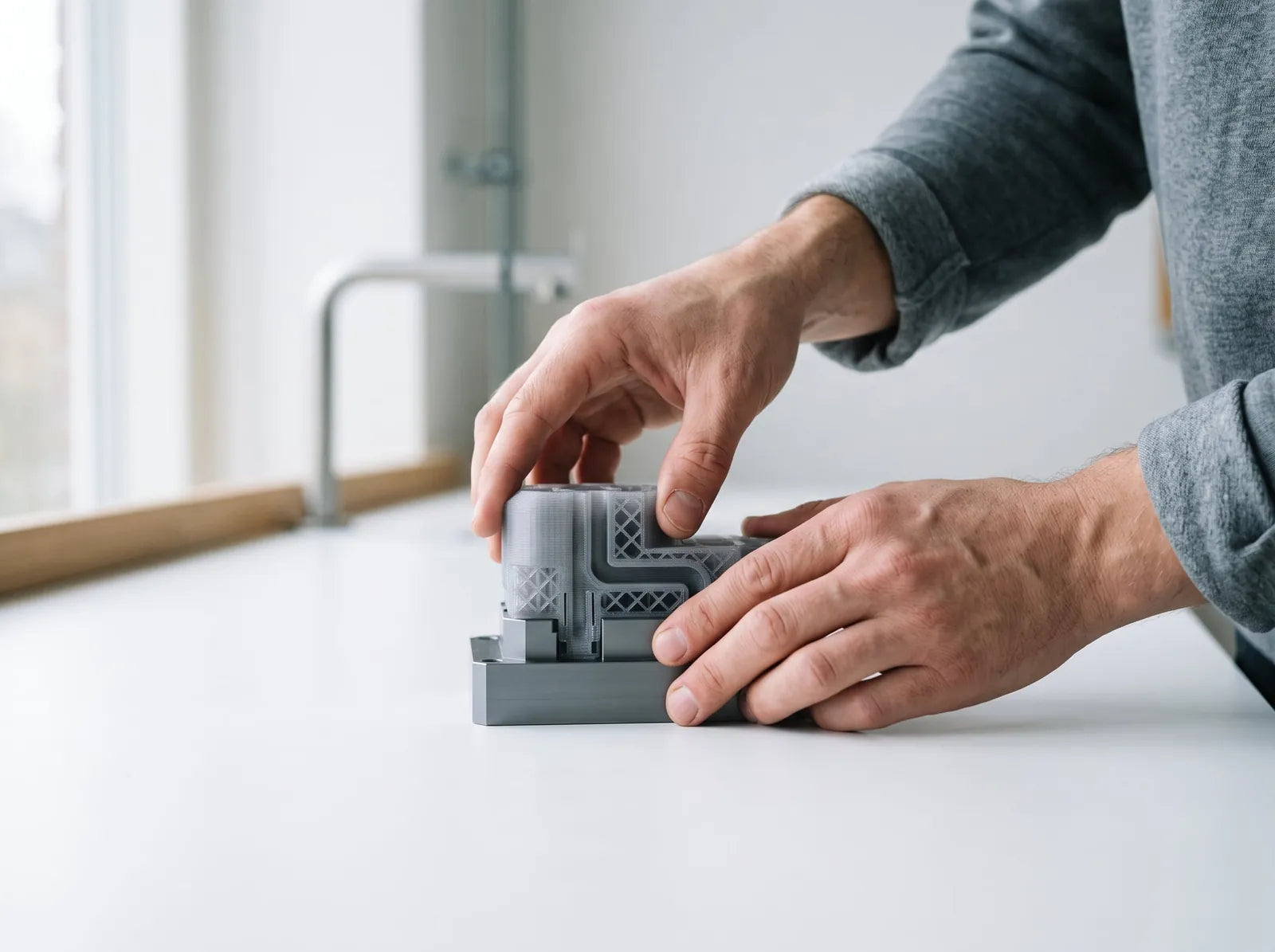
The model meets the calliper
VALIDATIONThe model meets the calliper
Measured, not guessed
TOLERANCESMeasured, not guessed
Fit proven before the series
TEST PRINTFit proven before the series
Ready for production
RESULTReady for production
GÅ I DYBDEN

CAD design in depth

The same model in three parametric variantsTECHNICAL
01

Parametrics: the model as an equation, not a sculpture

In a parametric model, the geometry is driven by named dimensions and relations: sheet thickness, hole spacing, clearance. Change one number and the whole model updates consistently — flanges follow, holes move correctly, and the assembly still fits. That turns revisions into minutes and variants (S/M/L of the same part) almost free.

The opposite is "dead" geometry — STL files and direct modelling without history — which needs redrawing for every change. That is why we often remodel old files once, so all future development becomes cheap.
2D drawing with tolerances next to the partTOLERANCES
02

Tolerances: precision where it pays for itself

Anything can be drawn to hundredths of a millimetre — but every tightened tolerance costs in production. Good CAD applies precision selectively: the H7 hole gets its tolerance and is drilled after printing; the rest of the part runs at the machine's natural accuracy. We mark critical dimensions in the model, so production knows what to measure.

Fit rules for printing differ from those for machining (gaps of 0.2–0.5 mm depending on function) — and they are second nature when the designer prints every day.

Optimised design versus the originalCOMPARISON
03

Design for the method: printing, laser or moulding

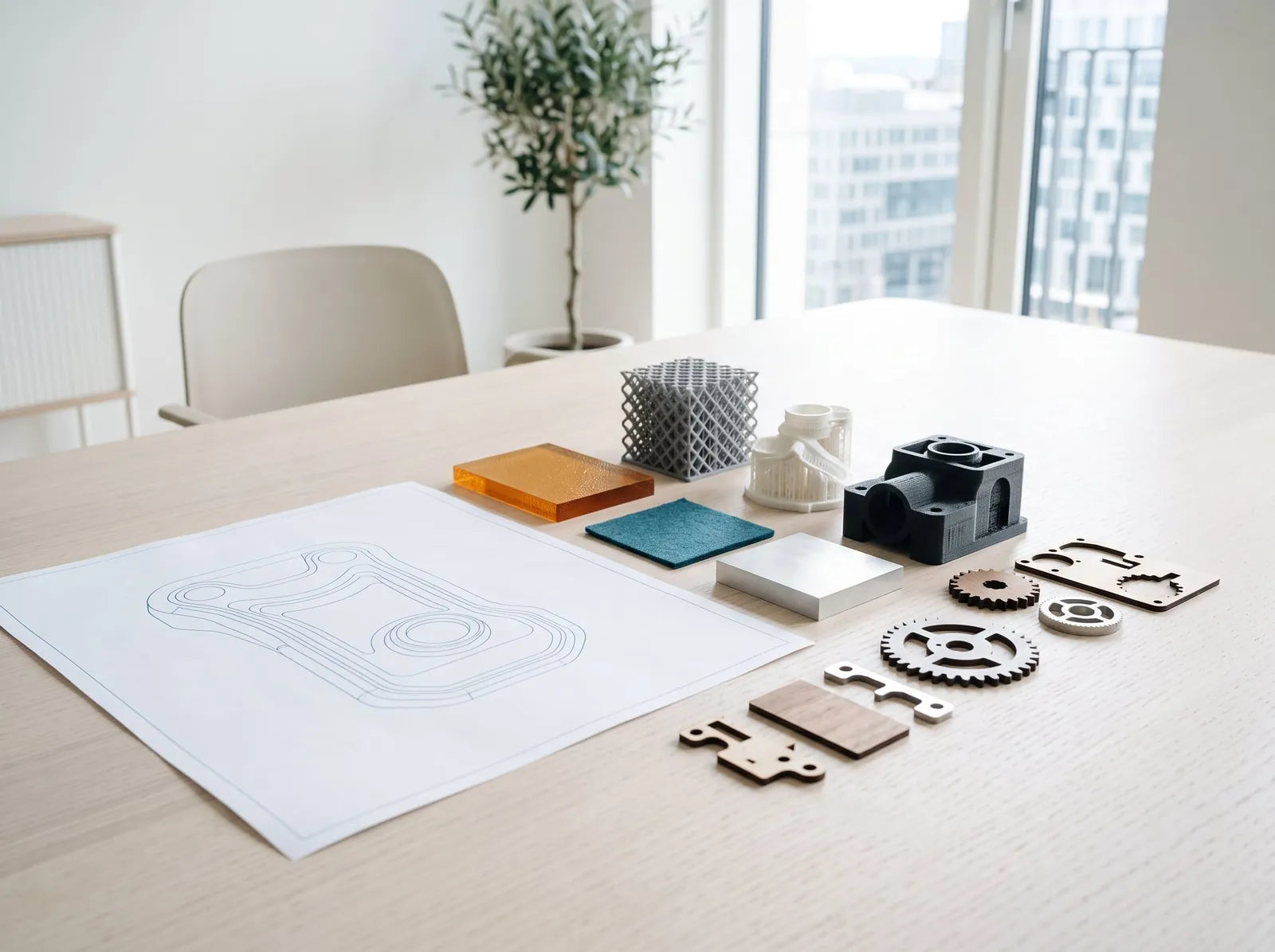
Geometry is not method-neutral: a printed part wants self-supporting angles and consolidated assemblies; a laser part is flat with tabs and finger joints; a moulded part needs draft angles and uniform wall thickness. We design for the method the part will meet — and make the transition (prototype in print, series in moulding) a revision rather than a redraw.

Hybrid solutions are often the economical answer: laser-cut sheets + printed details + standard components.

REFERENCE

Flere faglige emner

Fold et emne ud og læs hele afsnittet.

TECHNICAL04 Snap-fits, threads and living hinges — the details that decideEnclosure design is decided in the details: snap-fits sized to the material's elasticity, threaded inserts with the correct boss geometry …Læs hele afsnittet →Luk ↑

Enclosure design is decided in the details: snap-fits sized to the material's elasticity, threaded inserts with the correct boss geometry, cable strain reliefs and screw towers that do not split. We have printed and tested the variants in every material we use in-house — that empirical knowledge is in the models from the start.

The result is first prototypes that click, screw and assemble as intended — and therefore fewer iterations to an approved design.

FILE REQUIREMENTS05 File repair and remodellingMany projects start with a file that exists but does not work: a scan with holes, an STL without history, an old model with lost source files.Læs hele afsnittet →Luk ↑

Many projects start with a file that exists but does not work: a scan with holes, an STL without history, an old model with lost source files. Repair closes mesh errors for printing; remodelling recreates true CAD with parametrics — more expensive once, cheaper for ever.

Our honest advice: if the file only needs printing once, it is repaired; if it needs further development, it is remodelled.

TECHNICAL06 From model to production — nothing lost in translationThe classic source of error in development is the handover: the designer means one thing, the manufacturer reads another.Læs hele afsnittet →Luk ↑

The classic source of error in development is the handover: the designer means one thing, the manufacturer reads another. With us, the chain is unbroken — the model, the test print and the series are made by the same company, and the production profile (material, orientation, post-processing) is documented together with the file.

It also means that "could you just print the model you drew last year?" is a complete order: everything is ready.

FILE REQUIREMENTS07 From idea to production-ready file — what the CAD work involvesWe model parametrically in SolidWorks and Fusion 360.Læs hele afsnittet →Luk ↑

We model parametrically in SolidWorks and Fusion 360. This means the dimensions are driven by relations rather than drawn as fixed values: change a wall thickness or a hole spacing and the rest of the model updates with it. That is the difference between a file that can be revised and one you have to redraw.

You receive STEP for further processing elsewhere, STL or 3MF for printing, and a 2D drawing with dimensions and tolerances if the part is to be produced somewhere else. The files are yours — we do not lock them to us, and you can take them to another supplier without starting over.

ECONOMY08 DfAM: design rules that make the part cheaper and strongerDesign for Additive Manufacturing is about using what the printer can do and avoiding what it cannot.Læs hele afsnittet →Luk ↑

Design for Additive Manufacturing is about using what the printer can do and avoiding what it cannot. In practice: avoid overhangs beyond 45 degrees so supports can be saved; keep walls above 0.8 mm so they print reliably; replace solid material with lattice structures where the strength is not needed.

And most importantly: orient the geometry to the load, because a printed part is always weakest across the layers. We apply the rules as we design — and review them free of charge on your own files for orders over DKK 4,000.

TECHNICAL09 What we need to know before we startFive pieces of information shape the model: what the part attaches to, what it must withstand, where it will sit (indoors, outdoors, heat, chemicals) …Læs hele afsnittet →Luk ↑

Five pieces of information shape the model: what the part attaches to, what it must withstand, where it will sit (indoors, outdoors, heat, chemicals), how many will be produced, and which dimensions are critical. A drawing or a sketch is a fine starting point — but feel free to describe the problem rather than the solution.

We prefer the latter, because we can often see a simpler route. A customer asked for a holder with four brackets; after a chat it became one printed part without brackets, which was both cheaper and stronger. That conversation costs nothing.

LEVERING I HELE DANMARK

Produceret i Varde — leveret i hele Danmark

CAD projects run digitally with customers across Denmark — the model is emailed, the prototype is shipped:

VI LEVERER OGSÅ TIL
3D-print Esbjerg3D-print Kolding3D-print Horsens3D-print Randers3D-print Varde3D-print Vejle3D-print Silkeborg3D-print Herning3D-print Roskilde3D-print Frederiksberg
Levering 2–5 hverdage i hele Danmark · Express 1–2 hverdage · Afhentning i Varde
OFTE STILLEDE SPØRGSMÅL

CAD Design — ofte stillede spørgsmål

A fixed price after a short review — simple parts from a few hours of work, complete products as agreed projects with milestones. The price is in the quote before we start drawing, and DfAM advice is free on orders over DKK 4,000.

STEP as standard (readable by every system), plus STL/3MF for printing and DXF for laser as needed. Parametric source files can be agreed if you want to make revisions yourself.

Simple models typically take 2–4 working days; complex projects are planned with milestones. Combined with in-house printing, sketch → physical part can be done in under a week.

Yes — a conversation, the main dimensions and photos of the context are enough. We model it, you comment, we revise: parametric modelling makes iterations cheap.

Yes — the geometry is designed for the method the part will meet: printing, laser, machining or later injection moulding. Changing method is a parametric revision, not a redraw.

You do — always. No licences, no lock-in; the files are yours and can be taken freely to other suppliers.

Yes — STEP files are revised directly, and dead mesh files (STL) are remodelled into true parametric CAD when they need further development.

It is validated against the machines it will be built on: wall thicknesses, overhangs, fits and orientation are checked as part of the work — and if in doubt, a test block is printed before the whole part is run.

STEP for further processing, STL or 3MF for printing, and a 2D drawing with dimensions and tolerances if the part is to be produced elsewhere. The files are yours and can be taken to another supplier.

Yes. Send STEP, SLDPRT, F3D or another CAD format and we will take over. If the file is a mesh (STL), it often has to be remodelled to be editable parametrically — we tell you before we start.

Yes, fully. We do not lock files to us, and there are no ties on production. We are happy to sign an NDA before you send anything.

Fandt du ikke svaret?
Fagfolk i røret man–fre 08–16 — typisk svar i første opkald.
Klar til at komme videre?

Upload din fil eller ring — vi svarer med et bindende tilbud under 2 timer i arbejdstiden.

Standardtilbud < 2 timer · personlig behandling · 100 % dansk